Backed by

Combinator


Developers love Autumn
Because startups that need billing that's reliable and flexible, without any of Stripe's complexity.

Ben Y

@bendthebest
What migrating to Autumn does (scroll!)


Daniel Edrisian
@DanielEdrisian
Literally cannot imagine going without it. Thank you. We had some pretty crazy usage-based limitations for different features, as well as a free trial, and had some bad edge cases that were causing issues every week for our users. With Autumn we don’t have to think about it anymore. It’s godsent.















Why are people using it?
More than payments: it's building permission management, metering, usage limits with cron jobs, and connecting it to upgrade, downgrade, cancellation and failed payments states. Race conditions, edge cases, and other bugs will slow you down.
Growing companies iterate on pricing often: raising prices, experimenting with credits or charging for a new feature. DB migrations, rebuilding in-app flows, internal dashboards for custom pricing and grandfathering users on old pricing is a nightmare.
Autumn solves these problems and makes Stripe easy.
Pricing flexibility
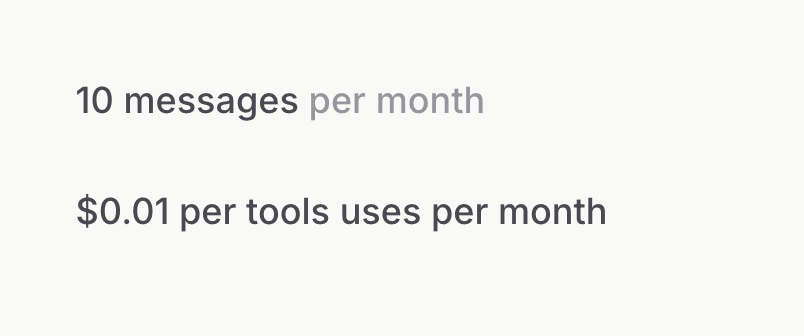
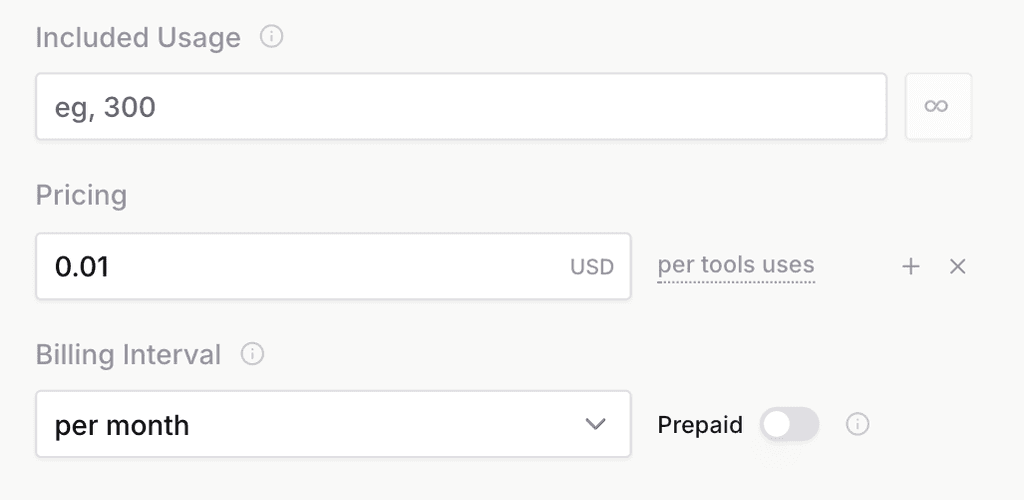
Credits, usage-limits, tiers, prepaid, add-ons, seats, referrals and more.
Custom plans
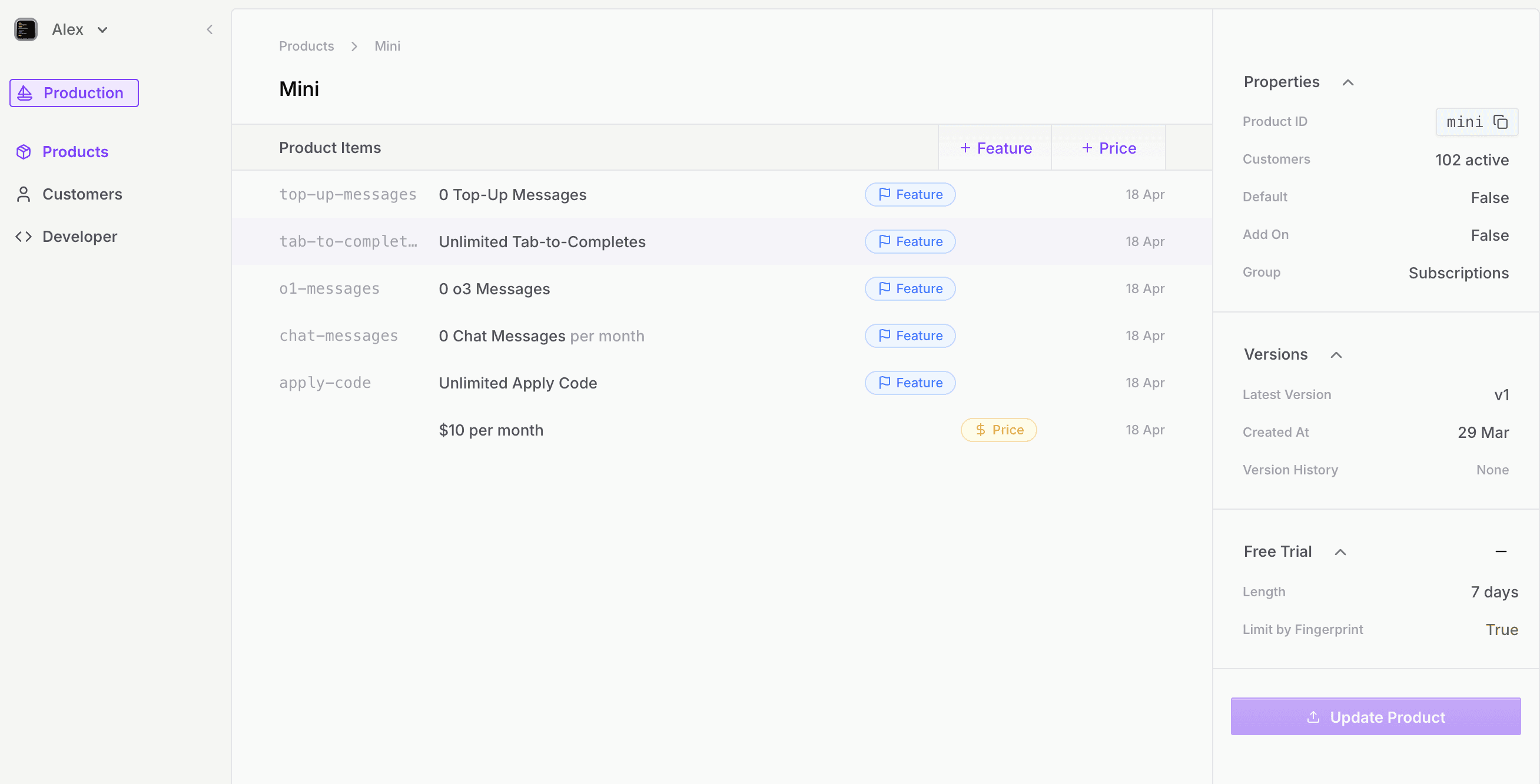
Set custom pricing, features and usage limits for any customer
Usage limits
Enforce real-time usage limits for each customer
No edge cases
Upgrades, downgrades, cancellations, failed payments handled reliably
Changes & Grandfathering
Version your products and migrate customers when you're ready
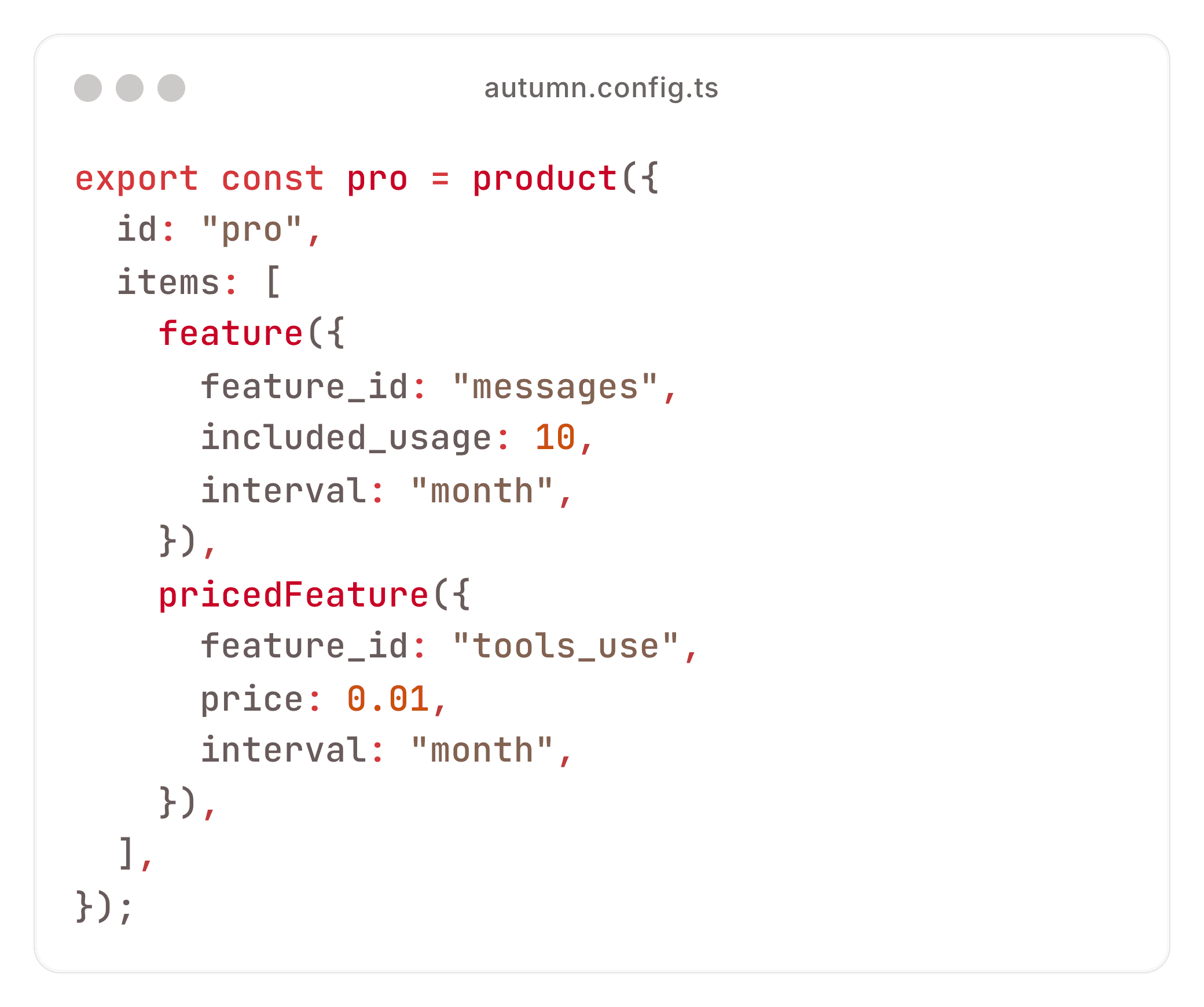
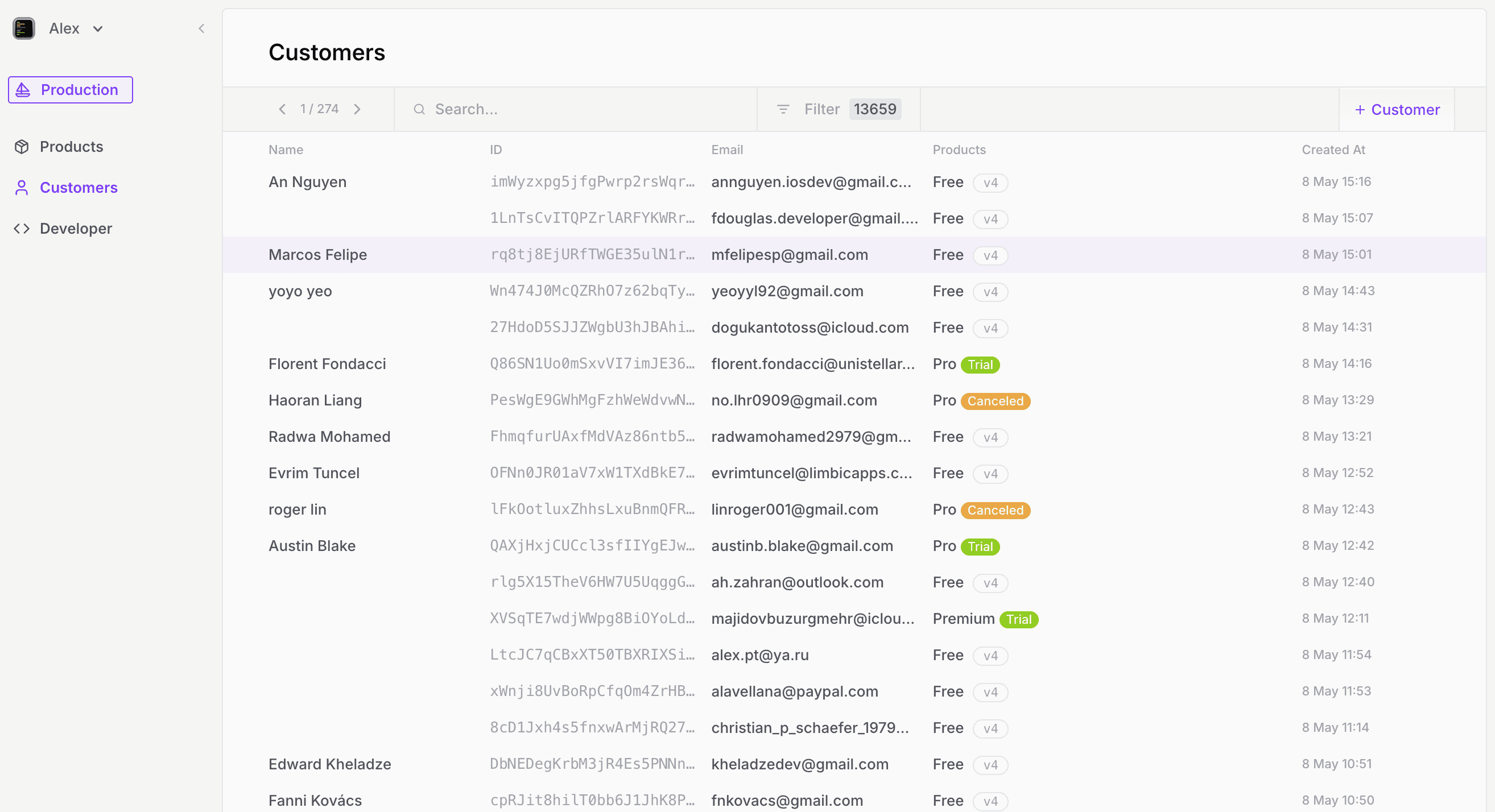
Autumn stores and manages your customer's permissions, subscription states and usage limits.
From your app, just use 3 functions.


One function call for all purchase flows. We return a Stripe Checkout URL, or handle an upgrade/downgrade.


Query whether a customer has access to a product, feature or remaining usage. No brittle webhooks needed.

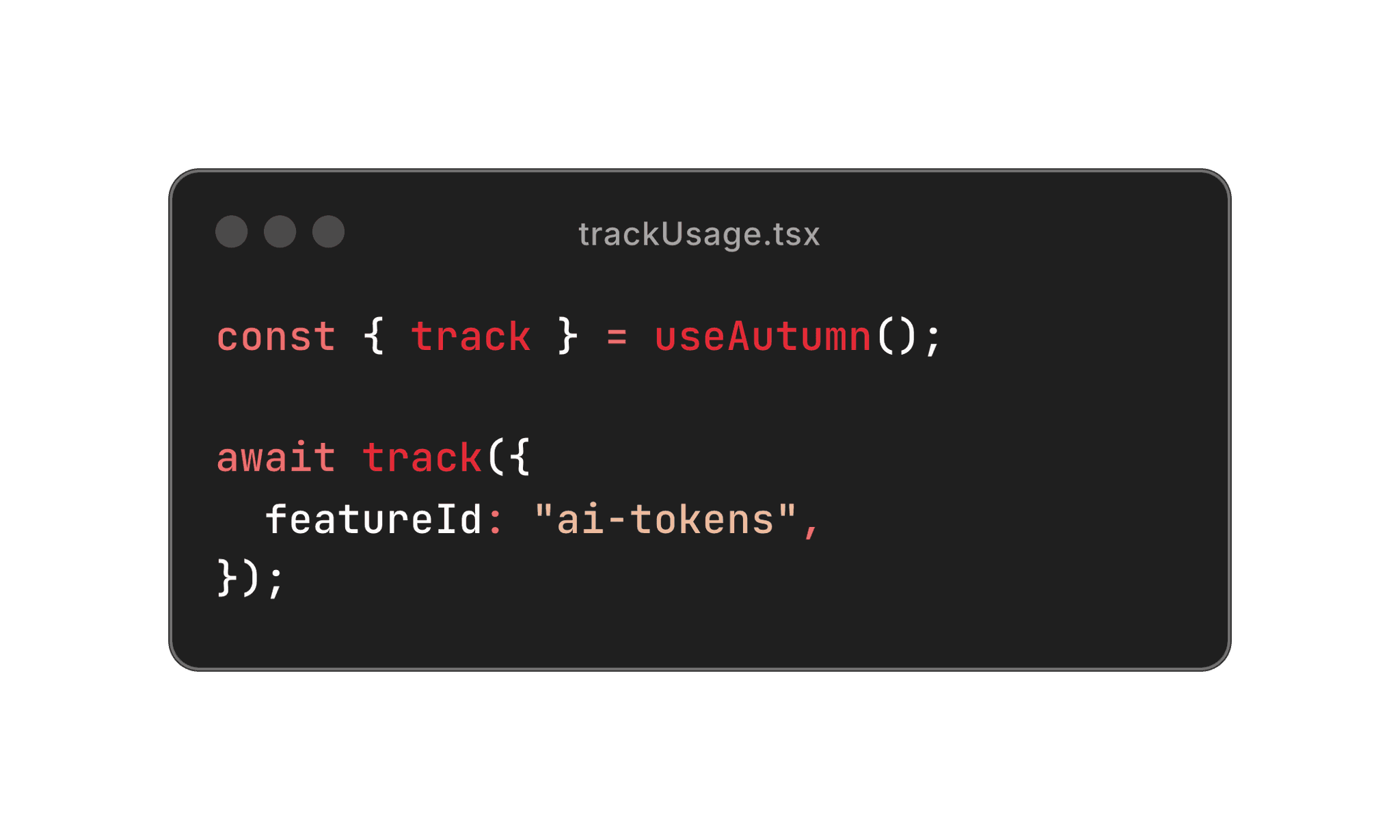
When a customer uses a usage-based feature, record a usage event. Use it to enforce usage limits or bill customers.
*Autumn is built on top of Stripe Billing (for now), so their fees (~0.7%) still apply